Showing posts with label Masterton. Show all posts

Video: DU Alum Bill Masterton's TSN Tribute


(above) TSN in Canada produced this biography of Bill Masterton

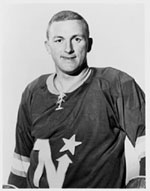
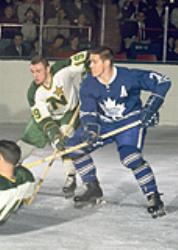
Bill Masterton won two national championships and was an All-American at the University of Denver in the early Sixties. In 1968 he suffered a head injury during a game against the Oakland Seals and is the only player in NHL history to die as a direct result of an on-ice incident during a game.  Masterton's injury directly led to youth players' mandatory use of helmets and today every hockey player in the world wears a helmet during practices and games.

DU 4 - USSR 4 (Jan. 10, 1959)

(above) The 1959 Soviet Union team that came to Colorado Springs to play Colorado College and DU 50 years ago this week

Editor's Note: Dick Hiker wrote this article for LetsGoDU to Commemorate the 50th Anniversary of the biggest game in DU hockey history. Its probably one of the the best articles we've ever published.
----------------

Fifty years ago—on Saturday Jan. 10. 1959—a dramatic international hockey game was played in Colorado and the result catapulted both the American collegiate game and the University of Denver’s program to a new level.

On the ice at the old Broadmoor Arena in Colorado Springs, the Pioneers pulled off perhaps their most stunning “upset” in history, fiercely battling to a 4-4 tie with the powerful Soviet Union National team.

It was a Russian squad hailed by many hockey experts as being among the best teams in the world—amateur or professional, including the then-six clubs in the National Hockey League.

Basically, the Russians were professionals disguised as amateurs as they prepared for an appearance on the world stage at the 1960 Winter Olympic Games at Squaw Valley, Calif. the following winter. The majority of the men with “CCCP” on their sweat suits were members of the Soviet Army “assigned” to hockey duty in Moscow.

Officially known as the “Soviet Select” team, members were meticulously chosen and prepared for their assignment: Win gold medals at the Olympics and the World Games and thereby create a propaganda coup for the motherland at the height of the Cold War. It was an era when strict amateur rules still were applied to athletes west of the Iron Curtain—but not east.

The Russian juggernaut, which won Olympic gold in its first try in 1956, was built on three components—superb physical conditioning, on-ice discipline and a newly created style of play which featured speed, teamwork and a dazzling short passing game. Coached by Anatoly Tarasov (left), hailed as the "Father of Russian hockey, was to be inducted into the Hockey Hall of Fame many years later.

The strategy of finesse was the opposite of the physical “dump and chase” style largely deployed throughout the NHL and in Canadian amateur ranks.

(Left) DU was led by Walker, Massier & Dingwall

The Buildup
The Soviet team had never played in North America and in order to prepare for the 1960 Olympics, a nine-game exhibition tour was arranged for 1959. Games six and seven would be in Colorado Springs against Colorado College and DU, certainly good collegiate teams (DU was the defending NCAA champion) but neither seemed to be in a class with the touring defending Olympic champs.

The Russians had little trouble winning four of the first five games, but were held to a tie by the U.S. National team.

The management of the Broadmoor Hotel, headed by brothers Thayer and Russell Tutt, rolled out the proverbial red carpet for the visiting Communists. The resort hotel was no stranger to hosting major athletic events (including the first 10 NCAA hockey championships and World and U.S. Figure Skating meets), but the international significance of hosting the mighty men from Moscow pushed the Broadmoor management and staff to a new level of hospitality.

The hotel’s fleet of white Cadillac limos was dispatched to Denver to meet the Russians at Stapleton Airport and a couple of hundred people were on hand at the hotel’s front entrance when they rolled up.

As flashbulbs popped, a Broadmoor waitress, who spoke fluent Russian, welcomed the visitors and the Tutts handed out white Stetson western hats to every member of the travel party. There was polite applause. The Russians’ broad grins appeared to be genuine. They had made it to America’s Wild West.

The night before the game with Colorado College, the hotel hosted a players-only party for all three squads. No coaches, team officials or press. Security was air-tight.

My sources on the DU team said the festivities lasted well into the night and that the European visitors consumed extremely large amounts of straight vodka. Our DU lads did their share of imbibing, too, but I have been assured that their thirst was only quenched by beer made with Rocky Mountain spring water.

The late Harley Key, the hockey beat writer for the Rocky Mountain News and my competition, figured we should do our bit to give the Russians a Colorado welcome. So, while the players were cavorting, we asked one of the Soviet big-wigs, Roman Kiselov, to join us for beverages in my hotel room.

Comrade Kiselov didn’t seem to have any official title with the Soviet entourage, but it appeared to Harley and me that he was the man in charge. During a briefing with a U.S. State Department official a couple of weeks earlier, we were told that the KGB would likely have a man or two in the traveling party. We also suspected Roman also played that part.

Kiselov was a gregarious Russian bear of a man who spoke very good English. Had he chosen to defect to the U.S., he could have made a fortune in Hollywood playing Russian roles.

To our delight, Kiselov took us up on our invite. In four hours, while he ingested an entire quart of the hotel’s best vodka and Harley and I did away with a quart of bourbon between us, we had a great discussion covering hockey, potato farming and the benefits of communist and democratic societies. By 2 a.m., we were all having breakfast at an all-night cafĂ© in downtown Colorado Springs.(We couldn’t get Kiselov to admit—or deny—that he was KGB.)

On Friday night, the Russian hockey players gave absolutely no indication that vodka—even consumed in large amounts at 6,000 feet above sea level—had affected their performance.

They defeated Colorado College 11-5 in a game that really wasn’t close. The visitors conducted a hockey clinic that might well have been choreographed by the Bolshoi.

Would a similar fate befall the Pioneers on Saturday?

No one could be certain. But the mood of the DU players indicated that this would be no mere exhibition skate. Far from it. All of the Hilltoppers were Canadians and national honor would be at stake. Coach Murray Armstrong didn’t hesitate to remind that hockey was Canada’s game, not Russia’s.

Armstrong had stressed DU’s defensive strategy in practice sessions for the past several weeks: breakup the Russian passing game with unrelenting back-checking and fore-checking. Keep them from getting their well-publicized rhythm. Denver’s changes would depend on one thing: A dogged defense.

Armstrong was wound tighter than a garage door spring late Saturday afternoon. His jaw was his game face and it was firmly set. He confided that his senior goaltender, Rodney Schneck, hadn’t been feeling well most of the day and he was concerned about it. But Rodney insisted he would be ready.

The Game
The Broadmoor arena had less than 3,000 seats, but an extra 400-500 standing witnesses had been stuffed into the old building. The crowd was both apprehensive and electric.

It is would be a contest pitting The Free World against soldiers from a state-run sports program designed for political advantage—a hockey game, it seemed, combined with a morality play.

Colorado Gov. Steve McNichols was involved in a ceremony in center ice before the first puck was dropped, but must most eyes were on the red-uniformed soviets lined up at their blue line. Were these guys really super men?

From the onset, the Pioneers gave every indication they could make a game of it.

They jumped to 2-0 lead. Bruce Walker got the first goal just five minutes into the game after he and center Murray Massier found themselves on a two-on-one break and Massier, who had played on Armstrong’s junior team in Regina, Sask., faked the Soviet defenseman right off his skates.

Three minutes later, Paul Josephson took John MacMillan’s pass and rammed home a goal from in front at short range.

But a night earlier, the Russians had also given up the first two goals of the game to Colorado College before switching their game into high gear. Was this going to be a repeat?

The visitors did storm back for a pair of goals of their own and tied it with nine and a half-minutes left in the period.

But the Pioneers answered. Sophomore defenseman Marty Howe, who had scored six goals and seven assists in DU’s first 11 games of the season, let loose with a 25-foot blast to make it 3-2.

A crucial point in the contest came soon after. MacMillian was assessed with a two-minute penalty, Denver’s first of the game.

In their first six games on the U.S. tour, the Russians had scored at least one goal on each of their power-play opportunities (international rules then mandated that players must serve the entire penalty, regardless of goals scored). There seemed to be no stopping the Soviets when they had a manpower edge.

But the short-handed Pioneers didn’t buckle under the pressure and held-fast for two minutes. Schneck, under the weather or not, was gallant in the nets.

Denver survived the first period with a 3-2 lead and Schneck had 14 saves.

The second period was just as hard-fought as the first. The Pioneers seemed to have the best of it. But it was the “Select” team that got the only goal of the stanza—a disputed one at that. Center Victor Iakushev got open in front of the net and got off a hard shot. The goal judge said the puck never made it across the goal line. But he was overruled by Referee Jack Riley.

Later in the period, Riley, a Bostonian, took away an apparent goal by DU’s Paul Josephson, saying the puck was forwarded by Josephson’s glove.

The game was not televised, so there could be no review of Riley’s calls.

The Pioneers suffered another severe blow in the period. Defenseman Howe, going down to block a hard Soviet shot, took the puck off his knee and collapsed in a heap. The kneecap was broken and the big Regina native was lost for the season. Armstrong was forced to make a major personnel switch, moving sophomore wing George Konik back to his more natural position at defense and putting senior winger Walt Dingwall on the ice for full-time duty.

After two, it was 3-3 and still anyone’s game.

Then, in the third period, there was drama heaped upon drama.

Marty Howe refused be immediately taken to Penrose Hospital for treatment. He demanded to watch the third period while laying on a gurney placed just off the ice at the entrance to the dressing rooms. He could watch the rest of the game and his teammates could see him.

If the Pioneers needed any more inspiration, they had it.

The Russians attacked with even greater determination in the third period. Could they have been threatened with transfers to Siberia?

But Denver, sticking with its strategy of check, check, check, was up to the challenge. The emotional crowd, composed of many Colorado College fans, screamed its support, hoping to see Ivan the Giant toppled.

With 7:50 gone, another of D.U.’s super sophomores, Center Bill Masterton, put the Pioneers ahead 4-3. He pounced on a loose puck in the Soviet end, made a quick stride forward and drilled an 18-foot forehand shot past Goalie Eugene Erkin.

It was 4-3 and the roar of the crowd was deafening. Even people in the press box—scorers, timers, reporters—were on standing and cheering. For the first and last time in my sports writing career, I briefly joined them. After all, with that racket, who could hear me?

The Pioneers, backstopped by Schneck, who had 14 more saves in the third, grimly hung on to the slim lead as minute after minute rolled off the clock. It was Rodney’s best game of his three-year career.

But with just over a minute to play, the Soviets got a sliver of an opportunity and capitalized with the tying goal. Racing down right wing, George Krylov got a half-step advantage on the D.U. defender and blasted away with a 20-footer from a difficult angle. The puck found the corner of the cage and it was 4-4.

That’s the way it ended up after another furious assault by the Russians in the final minute.

Hockey had no provisions for overtime in those days—a tie was a tie.

After the final horn, the crowd stood and applauded both teams as they filed off the ice past the prone Marty Howe.

“The boys played their hearts out,” Armstrong said in the dressing room. “They did everything anyone could ask of them.”

On Monday afternoon, when I stopped at D.U. Arena to watch practice, I caught flak from some of the players.

The headline across the top of the front page in the Sunday morning Denver Post sports section, set in “war-declared”-sized type, said DU TIES RUSSIANS, 4-4

“Hey, they tied us,” the players emphasized to me. Their anger with the headline writer said everything about how they had approached the game. (Fifty years later, while doing research for this story, I learned that my colleagues had changed the headline in later editions. The second version was DU, RUSSIANS PLAY 4-4 TIE. Much better.)

Epilogue
The 4-4 result was no fluke. The following year, 1960, the two teams had a rematch at D.U. Arena. It was another pressure-packed game that ended in a deadlock, 2-2. The Russian squad, with a lot of new faces from the year before, was now the nation’s Olympic team on its way to Squaw Valley.

In the Olympic semifinals, the U.S.S.R. was upset by the United States in he first “Miracle on Ice,” and the Russians had to settle for a bronze medal.

During the 1959-60 season, Denver not only tied the Ruskies 2-2 but also took two out of three games from the U.S. Olympians at D.U. Arena and also defeated the West German and Swedish Olympic squads.

Four of the players on the 1958-59 team that had valiantly tied the Russians eventually were named collegiate all-Americans—Marty Howe, George Konik, Bill Masterton and Grant Munro. Konik, Masterton and John MacMillan eventually played in the National Hockey League.

And, I can’t forget Roman Kiselov. While covering the Olympics at Squaw Valley I went to the Soviet dressing room after one of its games and found a gaggle of western sports writers waiting to get in for interviews. After several minutes, the door opened and there stood Kiselov. He looked at the impatient newsmen, spotted me and waved for me to come inside. Only me. Roman interpreted for me while I and the boys from Tass interviewed the Russian coach. The Denver Post had quotes. The New York Times could wait.

It’s amazing what a bottle of good Vodka can get you.

Backstrom Elected To Colorado Hall Of Fame

From: 9news.com

The Selection Committee of the Colorado Sports Hall Of Fame has elected former DU hockey coach Ralph Backstrom into its Class of 2009. Backstrom will join fellow Pioneers Murray Armstrong, Bill Masterton, Keith Magnuson & basketballer Vince Broyla (complete HOF Roster list).

Ontario native Ralph Backstrom was a member of six Stanley Cup champions with the Montreal Canadiens and was the NHL’s rookie of the year in 1959.

His connection to Colorado began when he joined the World Hockey Association’s Denver Spurs in 1974.

He bought a home in Parker and has been a Colorado resident ever since, including during brief coaching and playing stints elsewhere.

He was both an assistant coach and head coach at the University of Denver, where he led the Pioneers to the Frozen Four, a WCHA title and was National Coach of the year in 1986. He was also the founder of Roller Hockey International and founded and was co-owner of the phenomenally successful Colorado Eagles Central Hockey League franchise that is based in Loveland and draws from all of Northern Colorado.

The mission of the Colorado Sports HOF is to honor, by public acknowledgment or commemoration, those individuals who merit recognition and distinction for their exploits, accomplishments and leadership in sports and athletic endeavors in the state of Colorado. Equally, to build and make available programs and support for youth in our state, to cultivate character and citizenship as they grow toward leadership in our state and throughout the Nation.

More Photos From The Penrose Library Archives

(above) Goaltender Lucian Carignan makes a save while #3 Rod Summers and #10 Dave Gourlie defend during the 1987-88 season

(above) Coach Gwozdecky addresses the team before the championship game of the Norwest Denver Cup (January 1, 2000). Maine won 4-3.

(above) DU players (left to right) George Konik, Marty Howe and Bill Masterton pose after winning the MacNaughton Cup in 1961

More DU hockey photos were uncovered yesterday. The University of Denver's is is in the process of digitizing its historical athletics photos in the Special Collections Department for use on the internet. The link above contains additional photos.

Masterton Annivesary Covered By Media Outlets

(above) Bill Masterton tallied 80 points in 32 games in the 1960-61 season and led DU to a 12-2 victory in the National Championship game over St. Lawrence. In 1997, Masterton was one of 21 players named to the NCAA’s 50th anniversary team

There was a fair bit of coverage on the 40th anniversary of Bill Masterton's passing yesterday. The Minneapolis Star-Tribune re-ran the Dallas Morning News article that we posted. The Duluth News Tribune did likewise.

Western College Hockey Blog
linked an excellent article in The National Anthem Before A Cubs Game Blog that featured a chilling account of the incident from Time Magazine in 1968.

Bill Masterton: 1961 NCAA Tournament MVP

(left) Bill Masterton was a Pioneer in every sense of the word

The flags are at half mast at LetsGoDU's Corporate Headquarters today on the 40 anniversary of Bill Masterton's untimely death (see below). But its not all doom and gloom, as Bill left quite a legacy at the University of Denver. The MVP of the 1961 NCAA Championship Tournament, Bill scored 66 goals and added 130 assists in 89 games for the Pioneers. Remarkably, he had just 6 penalties for 12 minutes in his entire DU career.

Bill's greatest gift to the hockey world was unquestionably his tragic passing. Countless junior hockey players were told, "always wear your helmet," because of his death.

Awards
WCHA First All-Star Team (1960, 1961)
NCAA West First All-American Team (1960, 1961)
NCAA Championship All-Tournament Team (1961)
NCAA Championship Tournament MVP (1961)

Death Ended Masterton's Hockey Dream

LetsGoDU: This article appeared in the St. Paul Dispatch just after Masterton's death in 1968.
From: St. Paul Dispatch 1/15/68

Bill Masterton always dreamed of someday playing in the NHL. But not until the league expanded to 12 teams this season did Masterton fulfill his lifelong ambition. Masterton first began playing hockey in Canada's far flung junior hockey program and his first team was the St. Boniface Canadiens in the Manatoba Junior Hockey League in 1956-57.

But Bill - or Bat, as his North Stars' teammates
called him - didn't turn professional until he was 23. He choose instead to pursue a bachelor of science degree in business while on a hockey scholarship at Denver University.

The Winnipeg, Man. native still figured he had plenty of time to make the big time even after hissenior year when he scored 27 goals and collected55 assists on the way to being named MostValuable Player in the NCAA tournament.

Masterton recalled recently, "I signed with the Montreal organization and was assigned to their Hull-Ottawa farm club (1961-62) in the Eastern Professional Hockey League.

"After scoring 31 goals and 35 assists there, I moved up to Cleveland the following season and had what I thought was a pretty good year (AHL's sixth-leading scorer).

"But the Canadiens were loaded with centers so I really never had much of a chance to make the grade with them."

When any of the five NHL failed to draft him out of the Montreal organization, Masterton decided to quit pro hockey and return to Denver for his master's degree in 1964.

"By that time I had gotten married," Masterton continued," and there was this offer to work in contract administration for a big, establishedfirm like Honeywell.

"Everything seemed to be working out so well, I really didn't have much time to think about hockey."

Wren Blair, coach and general manager of the North Stars, was aware of Masterton's two-year pro record when he scouted the 6-foot, 186-pounder in several exhibition games he played for the U.S. National team.

Blair recalled, "I liked what I saw so I asked Bill if he would consider giving pro hockey
another fling. When he said he would like to try it, I bought his contract from Montreal.

"From what I saw of Bill in training camp, I think he'll help us. He had the misfortune of getting a shoulder separation just before the exhibition games started, but he worked hard with Lloyd Percival, our physical fitness expert, and was able to return for our last six or seven games and get three goals and a couple of assists."

Masterton said that the chance to play in the TwinCities had a big part in his decision to return to pro hockey.

"I doubt very much whether I would've considered playing hockey any place," Masterton said.

"I went to training camp knowing it wouldn't be a picnic, especially after being out of pro hockey for four seasons. I had the opportunity to skate quite a bit last summer when I coached in a summer league, and I think that helped me quite a bit. I was in pretty good shape when I reported."

Masterton admitted he was pleasantly surprised to still be with the parent club when it opened its regular season schedule Oct. 11. He would not have been eligible anyway to compete for the United States in the 1968 Winter Olympics because of his previous pro experience.

"When I signed a two-year contract, I more of less expected to spend this season at Memphis," Masterton said at the time. "I still may end up there but even if I do, I won't be disappointed because I've given myself two years to prove that I can play in the NHL."

"I realize it's going to be tough, but if I get the opportunity to play, I'm confident that I can make it."

Masterton did make it until his fatal accident Saturday night resulting in his untimely death early today.

The NHL's Bill Masterton Memorial Trophy

(above) Former Minnesota Gopher star Phil Kessel won the Bill Masterton Memorial Trophy last season while playing for the Boston Bruins

The Bill Masterton Memorial Trophy is awarded annually to the NHL player who best exemplifies the qualities of perseverance, sportsmanship, and dedication to ice hockey. The winner is selected by a poll of the Professional Hockey Writers' Association after each teams nominates one player in competition. It is often awarded to a player who has come back from career- or even life-threatening illness or injury. A player can win the trophy only once in his career.


1967–68 Provost, ClaudeClaude Provost Montreal Canadiens "Embodied the definition of perseverance and dedication to hockey" throughout his 15 year career.[2]
1968–69 Hampson, TedTed Hampson Oakland Seals Had his best statistical year on a recent expansion team.[3]
1969–70 Martin, PitPit Martin Chicago Black Hawks After denouncing his team at the end of the 1968-69 NHL season, Martin and his team came back with a first place, and Martin had 30 goals and 33 assists for 60 points.[4]
1970–71 Ratelle, JeanJean Ratelle New York Rangers A 20 year veteran, he won the trophy for a "lifelong dedication to strong, clean hockey".[5]
1971–72 Clarke, BobbyBobby Clarke Philadelphia Flyers Overcame diabetes to play in the NHL.[6]
1972–73 MacDonald, LowellLowell MacDonald Pittsburgh Penguins Overcame severe ligament and cartilage damage to his knee and scored 34 goals and 41 assists for 75 points during the 1972-73 NHL season[7]
1973–74 Richard, HenriHenri Richard Montreal Canadiens This honoured a career with 11 Stanley Cups.[8]
1974–75 Luce, DonDon Luce Buffalo Sabres Awarded for perseverance and dedication, after a 38-point increase in scoring from the previous season.[9]
1975–76 Gilbert, Rod Rod Gilbert New York Rangers Overcame a serious back injury early during his career.[10]
1976–77 Westfall, EdEd Westfall New York Islanders Awarded for being a good leader.[11]
1977–78 Goring, Butch Butch Goring Los Angeles Kings Made the NHL despite his small overall stature and weight, and had consistently good seasons.[12]
1978–79 Savard, SergeSerge Savard Montreal Canadiens Awarded for "dedication to hockey", after he won his 8th Stanley Cup in eleven seasons.[13]
1979–80 MacAdam, Al Al MacAdam Minnesota North Stars Rewarded for his perseverance after scoring a career high 42 goals and 51 assists for 93 points.[14]
1980–81 Dunlop, BlakeBlake Dunlop St. Louis Blues Although he was a star in junior hockey, he only broke out during the 1980-81 NHL season, after being drafted during the 1973-74 NHL season, by scoring 20 goals and 67 assists for 87 points. It was awarded for perseverance.[15]
1981–82 Resch, GlennGlenn Resch Colorado Rockies Awarded for perseverance, as he gave his young team more confidence while he served as goaltender.[16]
1982–83 McDonald, LannyLanny McDonald Calgary Flames Presented for his dedication; he was traded around the league numerous times, and when he was traded to the Flames, he scored 66 goals and 32 assists for 98 points.[17]
1983–84 Park, BradBrad Park Detroit Red Wings Awarded for his dedication to hockey[18]
1984–85 Hedberg, AndersAnders Hedberg New York Rangers He was recognized for a dedicated career, and unlike many other winners, for an exceptional season as well.[19]
1985–86 Simmer, CharlieCharlie Simmer Boston Bruins Overcame serious ligament damage to his knee to score 60 points.[20]
1986–87 Jarvis, Doug Doug Jarvis Hartford Whalers Awarded after he beat Garry Unger's record for consecutive games played, with 914 games.[21]
1987–88 Bourne, BobBob Bourne Los Angeles Kings Awarded for exemplifying the qualities of dedication and perseverance.[22]
1988–89 Kerr, TimTim Kerr Philadelphia Flyers He returned to score 48 goals and 40 assists for 88 points in 69 games after overcoming severe knee and shoulder injuries, as well as aseptic meningitis the season before.[23]
1989–90 Kluzak, GordGord Kluzak Boston Bruins Tried to overcome severe knee injuries, but after playing two games after his 10th knee operation, he retired.[24]
1990–91 Taylor, DaveDave Taylor Los Angeles Kings Played all his 17 seasons with the Kings, and was honored for his dedication.[25]
1991–92 Fitzpatrick, MarkMark Fitzpatrick New York Islanders Ovecame eosinophilia myalgia syndrome, a potentially life-threatening disease, and returned to the NHL.[26]
1992–93 Lemieux, MarioMario Lemieux Pittsburgh Penguins Scored 69 goals and 91 assists for 160 points, despite missing 24 games due to Hodgkin's lymphoma[27]
1993–94 Neely, CamCam Neely Boston Bruins Awarded "to recognize his valiant efforts to return to NHL action after suffering career-threatening injuries"; however he retired after 1995-96 NHL season due to them.[28]
1994–95 LaFontaine, PatPat LaFontaine Buffalo Sabres Overcame serous head injury[29]
1995–96 Gary Roberts Calgary Flames Successfully recovered from possibly career-ending surgery to correct bone spurs and nerve damage[30]
1996–97 Granato, TonyTony Granato San Jose Sharks Overcame possibly career-ending brain injury sustained during 1995-96 NHL season to score 25 goals during the 1996-97 NHL season[31]
1997–98 McLennan, JamieJamie McLennan St. Louis Blues Overcame bacterial meningitis[32]
1998–99 Cullen, JohnJohn Cullen Tampa Bay Lightning Overcame non-Hodgkins lymphoma[33]
1999–00 Daneyko, KenKen Daneyko New Jersey Devils Ovecame alcoholism.[34]
2000–01 Graves, AdamAdam Graves New York Rangers Awarded for all-around dedication to hockey[35]
2001–02 Koivu, SakuSaku Koivu Montreal Canadiens Overcame non-Hodgkins lymphoma[36]
2002–03 Yzerman, SteveSteve Yzerman Detroit Red Wings Eventually overcame several health problems, but played only a small part of the 2002-03 NHL season[37]
2003–04 Berard, Bryan Bryan Berard Chicago Blackhawks Overcame an eye injury that rendered the eye legally blind.[38]
2004–05 zzzNo winner due to the
2004-05 NHL lockout
- -
2005–06 Selanne, TeemuTeemu Selanne Mighty Ducks of Anaheim Overcame major knee surgery to score 90 points (40 goals and 50 assists)[39]
2006–07 Kessel, PhilPhil Kessel Boston Bruins Missed 12 games due to testicular cancer mid season.[40]

Bill Masterton's Death Changed Hockey Forever

(above) Bill Masterton with family

(above) Bill Masterton led DU to NCAA titles in 1960 and '61
.

From: Dallas Morning News
by Bill Heika

The death of DU hockey Alum Bill Masterton 40 years ago this week was tragic, unnecessary and foolish. And it changed hockey forever.

Such is the legacy of the only man who died because of injuries caused in an NHL game.

Masterton died in a Minneapolis hospital shortly after midnight on Jan. 15, 1968, a little more than one day after the 29-year-old rookie center for the Minnesota North Stars – now the Dallas Stars – fell to the ice during the first period of a game against the Oakland Seals and suffered significant damage to his brain stem. Masterton, like virtually every other player in the NHL at the time, wasn't wearing a helmet.

He'd worn a helmet at every other level of the sport – growing up in Manitoba; at the University of Denver, where he starred in the early 1960s; playing for the U.S. national team after he gained dual citizenship; and in the minors before he retired from hockey in 1967 to settle near the Twin Cities. (read rest of story)
DU HOCKEY LEGENDS

From Legends of Hockey.net
Article researched by du78

BILL MASTERTON

One of the greatest players ever to lace up the skates at DU was Bill Masterton. Bill won two National Championships at DU before his NHL career was tragically cut short when he fell to the ice and hit his head and passed away two days later. The details surrounding Bill's death are open to interpretation as Sports Writers and those in attendance have differing viewpoints on what happened. The most common is that Bill carried the puck into the Seals defensive zone during the first period of the game and made a back-hand pass to teammate Wayne Connelly, then in contact with a defending player he either slipped or was tripped.
Regardless which version of the event is true, Bill Masterton fell backwards and slammed the back of his head hard against the ice. He was taken off the ice unconscious on stretcher and transported to nearby hospital. Bill Masterton never regained consciousness' and subsequently died from his injury.

Growing up in Winnipeg, Bill Masterton had a knack for scoring goals and was often among the league leaders in that category. At 17 he joined the St. Boniface Canadiens and in 22 games responded with 23 goals and 49 points in 1955-56. Masterton and the Canadiens played in the Memorial Cup playoffs, where he tallied eight points in six games but it was the OHA's Toronto Marlboros who successfully defended their national junior amateur title.

In the fall of 1957, Masterton enrolled at the University of Denver, where he played hockey while getting an education. In four years with the school team he was one of the club's top offensive weapons, averaging more than two points per game in each of his last three seasons. Masterton helped the school to win an impressive two NCAA national titles, 1960 and again in his senior year in 1961, when he was named the most valuable player of the entire NCAA tournament.

Following graduation, Masterton was hopeful of landing a professional job in hockey, but with just six teams in the NHL, cracking a team's lineup was next to impossible. In 1961-62 Masterton joined the Hull-Ottawa Canadiens of the EPHL, a minor pro league. Among some of Masterton's more notable teammates included future NHLers Keith McCreary, Jim Roberts, Barclay Plager, Terry Harper, Dallas Smith and goalies Cesare Maniago and Ernie Wakely.

Masterton toiled patiently in the minors for six years, mostly in the USHL before getting a shot at the NHL when the league expanded to 12 teams for the 1967-68 campaign. The expansion Minnesota North Stars signed him to a free-agent contract, which was the thrill of a lifetime for Masterton, who had for so long dreamed about one day making it to the best hockey league in the world. But, after just 38 games in the league, tragedy struck. During a North Stars' game against another expansion team, the California Seals, on January 13, 1968, Masterton fell awkwardly to the ice, hitting his head. He died two days later of massive head injuries, becoming the first player to die as a direct result of an injury during an NHL game. He was just 29.

Masterton is forever immortalized by the league, with a trophy named in his memory. It is awarded annually to the NHL player who best personifies perseverance, sportsmanship and dedication to the game of hockey as voted upon by the members of the Professional Hockey Writers' Association. Bobby Clarke, Serge Savard, Mario Lemieux, Cam Neely and John Cullen are just a few of the big names that have been honoured with the Bill Masterton Memorial Trophy in past years.

Awards
WCHA First All-Star Team (1960, 1961)
NCAA West First All-American Team (1960, 1961)
NCAA Championship All-Tournament Team (1961)
NCAA Championship Tournament MVP (1961)

From Legends of Hockey.net
Article researched by du78

Puck Swami's Ranking of Most Famous DU Athletes in History

(Left) Penguins GM Craig Patrick at the NHL's Draft Lottery Board

1. Keith Magnuson (Hockey) - Two time Denver all-American defenseman who won two NCAA titles with Pioneers in 1968 and 69 and went on to long career with Chicago Blackhawks as both a player and coach. Best known of the 50+ NHL players to come out of Denver. Died in 2003 car crash.

2. Glenn Anderson (Hockey) - Played in 1979 for Denver and Canadian Olympic team and went on to a 500+point NHL career, mostly with the Edmonton Oilers glory teams of their Stanley Cup era in the 1980s.

3. Craig Patrick (Hockey) - Captain of an NCAA title team in 1969 with Denver, Patrick played in the NHL for many years, was the assistant coach of the 1980 "Miracle on Ice" Gold Medal US Hockey team, became AD at Denver, GM of the New York Rangers and is now president and GM of the Pittsburgh Penguins.

4. Dan Schatzeder (Baseball) - Former Pioneer pitching and hitting star turned journeyman pitcher for a number of MLB teams for 15 years, but won a World Series Ring with the Minnesota Twins (1987). Best known of Denver's six players to make it to major league baseball.

5. Vince Boryla (Basketball) - Was an All-American at Denver in 1949-50 and went on to become a US Olympic and NBA player, head coach and GM all with the New York Knicks, as well as an basketball executive with other teams. Best known of the 5 DU players to play in the NBA.

6. Kevin Dineen (Hockey) - Former Pioneer captain played 20+ years in the NHL, including all-star years with Hartford and Philadelphia. Retired in 2003.

7. Sam Etcheverry (Football) - Was a star QB for many years in the Canadian Football League from the 50s to the 70s and is a member of the CFL Hall of Fame. Brief NFL Stint with St. Louis Cardinals. Probably DU's best known football player.

8. Jerome Biffle (Track and Field) - DU's 1950 NCAA long jump champion who won 1952 Olympic Long Jump Gold Medal at Helsinki Olympics (24 feet, 10 inches). Died in 2002 after three decades coaching at Denver's East High School.

9. Peter McNab (Hockey) - Played long career with Boston Bruins and New Jersey Devils. Now Broadcaster for Colorado Avalanche

10. Byron Beck (Basketball) - Shooter played 10 years for Denver Nuggets in both ABA and NBA. Had his number retired by the Nuggets.

Honorable Mentions:
DU Basketball: David Adkins is a former Pioneer basketball player now known as "Sinbad" -- a moderately famous comedian. Former DU coach Stan Albeck coached at DU and later with San Antonio, New Jersey and Chicago in the NBA. Current San Antonio coach Greg Popovich has a masters' degree from DU. Denver's NBA players include Byron Beck (Denver Nuggets), Vince Boryla (NY Knicks) Jimmy Darden (Denver Nuggets) Don Putnam (St. Louis Bombers) Winfred Jacobs (St. Louis Bombers) and Bob Warlick (Detroit Pistons, San Fran Warriors, Milwaukee Bucks and Phoenix Suns). Misa Pavlickova played in WNBA (Utah Starzz and Phoenix Mercury) and for the Czech Republic in the 2004 Athens Olympics.

DU Baseball: Six DU players have made it to the big leagues. Henry Bostick (Philadelphia As), Ray Boggs (Boston Braves), Jack Tising (Pittsburgh Pirates) Steve Blateric (Cincinnati Reds, NY Yankees and California Angels), Craig Stimac (San Diego Padres) and Dan Schatzeder (Expos, Tigers, Giants, Phillies, Twins, Indians, Astros, Mets and Royals).

DU Hockey's NHLers: DU has produced about 50 NHLers including Keith Magnuson, Glenn Anderson, Craig Patrick, Kevin Dineen, Peter McNab, Bill Masterton, Bruce Affleck, Erik Andersson, Adam Berkhoel, Doug Berry, Ken Berry, Lyle Bradley, Matt Carle (Current), Cliff Korroll, Pete Lo Presti, Ron Grahame, Rich Preston, Marshall Johnston, Ed Beers, Rick Bragnalo, Mike Busniuk, Mike Christie, Antti Laaksonen (Current), Paul Comrie, Ed Cristofoli, Wade Dubielewicz, Dallas Gaume, Lex Hudson, Chris Kenady, George Konik, Mike Lampman, Jim Leavins, John MacMillan, Tom Martin, Dwight Mathiasen, Derek Mayer, Paul Messier, Gavin Morgan, Rob Palmer, Matt Pettinger (Current), Craig Redmond, Mark Rycroft (Current), Wayne Smith, Paul Stastny (Current), Vic Venasky, Bob Shires, Jim Wiste, Joe Noris, Tom Miller, George Morrison, Lynn Powis

DU's NFL players - Bob Balog (1949 - 1950 Pittsbugh Steelers), Greg Browning (1947 NY Giants), Fred Dreher (1938 Chicago Bears), Sam Etcheverry (1961 - 1962) (St. Louis Cardinals), Tom Fena (1937 Detroit Lions), Bob Gifford (1942 Brooklyn Dodgers), Bob Hazelhurst (1948 Boston Yanks), Ray Johnson (1937 - 1940) (Cleveland Rams, Chi Bears, Chi Cardinals), Mike Jurich (1941 - 1942 Brooklyn Dodgers), Don Stansauk (1950 - 1951 Green Bay Packers), Morgan Tiller (1941 - 1945) (Pittsburgh Steelers, Boston Yanks), John Woudenberg (1940 - 1949) (Pittsburgh Steelers, SF 49ers)

DU Soccer - Nat Borchers plays for the Colorado Rapids, and has appeared with the US National Team.

Administration - Lyman Bingham was the a star multisport athlete at DU from 1911-1915, and eventually become the first executive director of the US Olympic Committee in 1950.